
One of the first things visitors to Cusco comment on is the flags. From the giant flag in the city centre to those on buidlings all over the city. Maybe the first thought you had when seeing this was Wow, Cusco is very LGTB friendly! I’m afraid the Cusco flag is not the same as the LGTB one. It has a different meaning . If you want to know more, then keep reading!
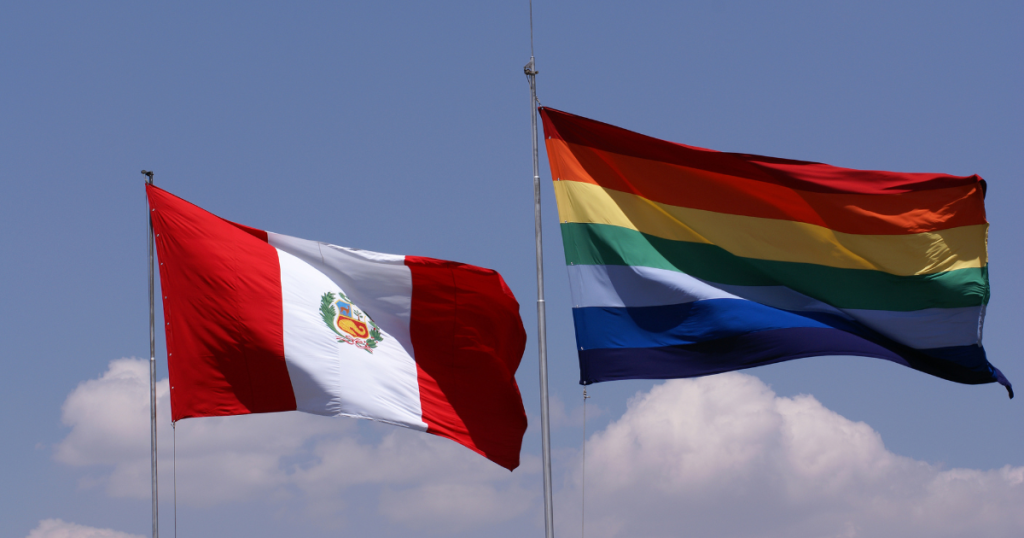
The flag of Cusco is made out of multiple stripes of colours from red and violet. All the colours of the rainbow. While it may look like the LGBT flag it actually has one additional stripe and has its own story.
History and Origin of the Cusco Flag
Cusco has adopted this flag and named it the Tahuantinsuyo flag. The are different opinions on when it was first flown. However, the concept of flags was brough to the Americas by the Europeans, so it was not used during the Inca empire. Our main source of information about the Inca is Spanish historians who collected stories from the local people. The Inca did not have an alphabet system, so no writing persists. In these stories, you can see that the Tahuantinsuyo did not have a flag per se, but what they did have were a bunch of colourful emblems that the Spaniards thought were the Incas’ symbols. Each Inca has a different emblem that represented him, but not the empire.
Before the arrival of the conquistadors, the civil war between Huáscar and Atahualpa ended with the victory of the latter. The Spaniards arrived shortly after this conflict and, during their first interaction with the locals, they were told an ancient myth of the Inca Empire. This myth was about the Wiracocha God, a white man with a long beard. He sailed towards the north and promised to come back when a powerful Inca takes over the empire. With him, the white man would rule the world.
The people from the Inca Empire saw Francisco Pizarro as the man from the myth, and Atahualpa thought he was the powerful Inca the white man was meant to rule the world with. This is allegedly why he decided to hide all negative events of the empire, including objects such as emblems of previous Incas.
After the conquest and the Spanish dominance, the indigenous people never stayed silent. In the XVIII century, Túpac Amaru II, an Inca descendant, organised a rebellion that shook the Spanish dominance in the southern Andes. After failing, Túpac Amaru was decapitated in the main square of Cusco. Then, the Spanish decided to ban all indigenous traditions linked to the Inca Empire; this way, people would forget their roots. This rule lasted until the end of the viceroyship in 1824.
Cultural Reclamation
After many decades, the people of Peru started to bring back their traditions. This is why it was important for them to recreate many cultural activities of the past such as Inti Raymi, of Festival of the Sun.
So, the flag of Cusco itself was created in 1978 through a contest organised by a local radio station. This new symbol aimed to encompass the Tahuantinsuyo history. The author or designer of the flag took his inspiration from the wiphala, an Aymara word that means banner. This banner had a squared shape and had seven colours.
So, when you see this flag in Cusco you are seeing an emblem of cultural reclamation.
Proyecto Peru is a language and volunteer centre in Cusco, Peru. Check our volunteer programs, internships and authentic Spanish Immersion Programs.
Articled translated and adapted from Full Days.