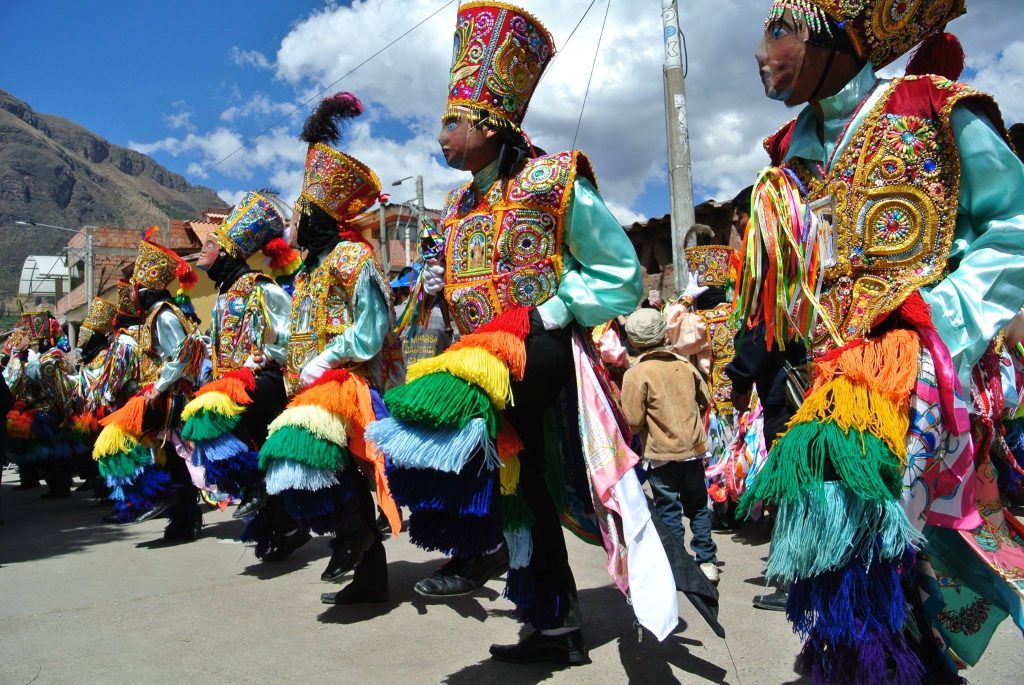
If you are travelling through Cusco and the Sacred Valley, you will quickly encounter Quechua. It appears in place names, on signs, in local traditions and in conversations throughout the region. You may even hear people speaking it alongside Spanish.
For visitors who become interested in the language, a natural question follows:
Is Quechua difficult to learn? And if it is, is learning it actually worth the effort?
The short answer is that Quechua can be challenging for Spanish and English speakers, particularly at the beginning. Its grammar works differently from the European languages most international visitors are familiar with, and there is less learning material available than for languages such as Spanish, French or Germans.
But difficulty is not the same thing as impossibility.
With regular practice, learning Quechua can give you a completely different perspective on Peru, the Andes and the people who speak the language. For someone spending significant time in Cusco or the surrounding region, even learning the basics can be a rewarding experience. If you plan to hike in the region, it is not uncommon to find people who speak little or no Spanish, and even very basic Quechua can make a real difference.
First, what exactly is Quechua?
One of the first things to understand is that Quechua is not simply one standardized language spoken identically throughout South America. Quechua refers to a family of closely related varieties spoken across parts of Peru, Bolivia, Ecuador, Colombia and Argentina. The varieties can differ considerably in vocabulary, pronunciation and grammar.
Here in Cusco, learners will generally encounter Southern Quechua, particularly the variety traditionally associated with the Cusco region.
This is important because you may find different spellings, vocabulary or pronunciation when looking at Quechua resources from different parts of the Andes. It does not necessarily mean that one source is wrong. It may simply be describing a different variety. For learners, this is one reason it is useful to choose resources that specifically identify which variety of Quechua they teach.
So, why is Quechua difficult to learn?
There is no single reason. Several characteristics of the language can make it challenging for someone whose previous language-learning experience has mostly involved European languages.
1. The vocabulary is unfamiliar
If you speak English, Spanish, French, German or another European language, you are used to encountering familiar words when learning another European language. Spanish learners of Italian, for example, will quickly recognize many words that have similar origins.
Quechua is different.
Its vocabulary developed independently from the Indo-European languages spoken in Europe. As a result, you cannot rely on thousands of familiar words and cognates to help you guess the meaning of a new word. This means that you have to build your vocabulary from the ground up. Which can initially feel frustrating.
At the same time, it can be one of the most interesting aspects of learning the language. Every new word represents something genuinely new rather than another variation on something you already know.
2. Quechua grammar works differently from Spanish and English
For many learners, grammar is where Quechua begins to feel particularly unfamiliar.
English and Spanish tend to communicate grammatical information through combinations of separate words, changes to word endings and word order. Quechua, however, makes extensive use of suffixes.
A suffix is added to a word to modify or expand its meaning. Several suffixes can be attached to a single word, allowing a considerable amount of information to be communicated within that word. This is one reason Quechua is often described as an agglutinative language. You do not need to understand the linguistic terminology to learn Quechua, but understanding the basic idea is useful. Instead of thinking of every word as an indivisible unit, you begin to see words as combinations of meaningful parts.
This can feel strange at first. Eventually, however, it can become one of the most satisfying parts of learning the language because you start to recognize patterns rather than simply memorising vocabulary.
Other agglutinative languages include Turkish, Japanese, Korean and Finnish.
3. Word order may not feel familiar
Another challenge is that Quechua does not organise sentences in exactly the same way as English or Spanish. Learners who are accustomed to building sentences according to familiar European patterns may initially try to translate everything word-for-word.
That usually does not work very well.
Learning Quechua requires you to become comfortable with the way the language itself constructs meaning rather than constantly trying to convert it into Spanish or English in your head. This is a common experience when learning any structurally different language. The more you progress, the less you need to translate mentally.
4. There are fewer learning resources
This is perhaps one of the biggest practical challenges.
If you want to learn Spanish, you can choose from thousands of textbooks, websites, apps, podcasts, YouTube channels, graded readers and online courses.
The situation is very different for Quechua.
There are certainly resources available, including dictionaries, academic publications, online courses and community-created material. However, they can be harder to find and may vary considerably in their approach and the variety of Quechua they cover. For a beginner, this can make it difficult to know where to start. It also means that finding a teacher or course familiar with the variety of Quechua you wish to learn can be particularly valuable.
Is Quechua harder than Spanish?
If you are visiting Peru and deciding which language to learn, this is a reasonable question. For most international visitors, Spanish will be the more practical language to learn first. Spanish is spoken throughout Peru and is the primary language used in most everyday interactions with visitors, businesses, public services and institutions.
Quechua serves a different purpose.
It is spoken by millions of people across the Andes, but its use varies significantly by region and community. In some places you may hear it constantly. In others, Spanish will dominate everyday communication. So if your only objective is to communicate as widely as possible during a short trip to Peru, Spanish is the obvious priority.
That does not make Quechua less valuable. It simply means that the two languages serve different purposes for a visitor.
Then why learn Quechua?
There are actually several good reasons.
To understand more of Andean culture
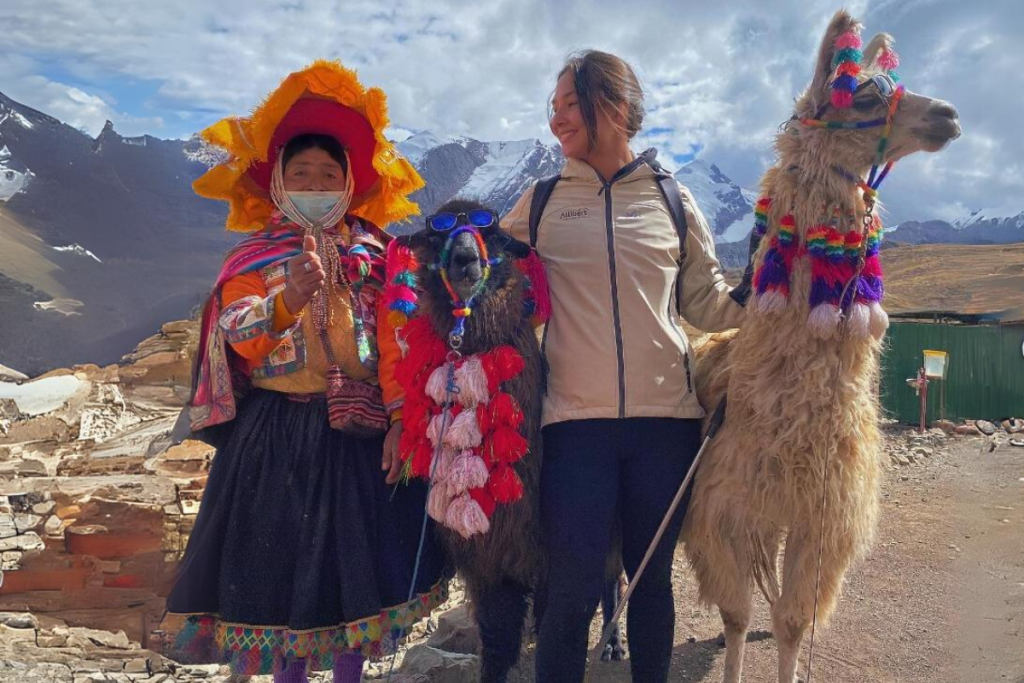
Language is more than a communication system. It influences the way people describe relationships, places, time, nature and their surroundings. Learning even a small amount of Quechua can therefore help you notice aspects of Andean culture that you might otherwise overlook.
You begin to recognize words in place names and conversations. You may understand references that previously sounded unfamiliar. You also become more aware that Peru’s cultural history extends far beyond the Spanish colonial period.
Because you are spending time in Cusco or the Andes
If you are going to spend weeks or months in Cusco, the Sacred Valley or another part of the Andes, learning some Quechua can be particularly rewarding.
You do not need to become fluent. Knowing greetings, numbers, basic questions and common expressions can make everyday interactions more interesting and can demonstrate that you have made an effort to engage with the local culture.
Because you want to learn something unusual
There is also a simple reason to learn Quechua: It is an interesting language.
Most international travellers to Peru will learn a few words of Spanish. Far fewer will attempt Quechua. For people who enjoy languages, that alone can be a compelling reason. Quechua offers a linguistic experience very different from learning another Romance or Germanic language.
Because you are interested in linguistics
Quechua is particularly interesting for language enthusiasts. Its structure provides an opportunity to explore concepts such as agglutination, suffixation and evidentiality in a living language rather than simply reading about them in a linguistics textbook. You begin to see how differently human languages can organise information.
Is learning Quechua worth it if you already speak Spanish?
This can actually be an excellent combination.
Spanish gives you the ability to communicate widely throughout Peru. Quechua gives you another way of understanding the region.
Knowing Spanish can also make some aspects of learning Quechua easier because you are already familiar with the cultural and geographical context in which the language is spoken. However, it is important not to assume that knowing Spanish will make Quechua linguistically similar to Spanish. They are separate languages with very different histories and structures. Think of Spanish as a gateway to communicating across Peru, while Quechua can give you a deeper connection to particular communities and the Andean cultural landscape.
How long does it take to learn Quechua?
There is no single answer.
It depends on:
- How regularly you study
- How much time you spend listening and speaking
- Whether you have access to a teacher
- Which variety of Quechua you are learning
- Whether you already speak another language
- How much opportunity you have to use Quechua outside the classroom
It is also important to define what you mean by “learn.”
Learning enough Quechua to introduce yourself and have a few simple exchanges is very different from being able to hold a detailed conversation with a fluent speaker.
A realistic approach is to think in stages.
Beginner
You can learn greetings, introductions, numbers, basic vocabulary and simple phrases.
Elementary
You begin constructing your own sentences and understanding basic conversations.
Intermediate
You become increasingly comfortable with the grammar and can communicate in a wider range of everyday situations.
Advanced
You can participate in more complex conversations and understand a much wider range of spoken language.
For most visitors, reaching a basic conversational level is a much more realistic and useful goal than trying to become completely fluent during a short stay.
Is Quechua worth learning for travellers?
For a two-week holiday in Peru, probably not as your primary language-learning project.
Spanish will give you much more practical benefit.
But if you are:
- spending several months in Peru
- living in Cusco
- volunteering in an Andean community
- studying in Peru
- interested in Peruvian culture
- travelling extensively through the Andes
- passionate about languages
- interested in indigenous languages
then learning Quechua can be a very worthwhile investment of your time. And you do not have to choose between learning Spanish and learning Quechua. For many people, the two complement each other extremely well.
The biggest challenge may not actually be the language
Perhaps the most difficult part of learning Quechua is not the grammar or vocabulary.
It may simply be finding opportunities to use it regularly. A language becomes much easier to remember when you hear it, speak it and use it in meaningful situations. That is particularly important with a language like Quechua, where the available learning materials are more limited than those available for major international languages.
If you are studying in Cusco, look for opportunities to listen to Quechua outside the classroom. Speak with your teacher. Ask questions about regional vocabulary. Pay attention to place names. Learn about the communities where the language is spoken.
The more the language becomes connected to real people and places, the less it feels like an abstract list of vocabulary.
So, is Quechua worth learning?
Yes, if you have a reason or desire to learn it.
If your goal is simply to communicate with as many people as possible in Peru, learn Spanish first. But if you are interested in the Andes, Peruvian culture, indigenous languages or spending meaningful time in Cusco and surrounding communities, Quechua can offer something that Spanish cannot. It can change the way you hear the region. A place name becomes something you can understand rather than simply pronounce. A word you hear in conversation becomes recognizable. A greeting becomes something you can use yourself.
And perhaps that is the best reason to learn any language. You do not necessarily learn it because you need it. You learn it because it allows you to see a place, and the people who live there, from a slightly different perspective.
Want to learn Quechua in Cusco?
If you are interested in learning Quechua while spending time in Cusco, studying with a local teacher can give you the opportunity to learn the language in the cultural context in which it is actually spoken.
At Proyecto Peru, language learning can be combined with your experience of living, studying and volunteering in Peru. Whether you are starting with your first Quechua words or looking to develop your existing knowledge, learning alongside people who know the local language and culture can make the process much more meaningful.
Contact our team at infor@proyectoperucentre.org or visit our Quechua page to learn more and book your program