
Volunteering or completing an internship abroad can be much more than an opportunity to travel, experience a new culture or spend time in a different country. It can also help you develop practical skills, gain professional experience, explore a possible career and build stories that strengthen future job, university and postgraduate applications.
However, simply writing “Volunteer/ed in Peru” on your CV is unlikely to show the full value of your experience. Employers, university admissions teams and scholarship committees want to understand what you actually did, what responsibilities you had, what skills you developed and how the experience changed your perspective. The strongest applications do not simply list where you travelled. They explain the contribution you made and the lessons you can carry into future study or work.
Whether you volunteered in education, animal care, community development or environmental conservation, or completed an internship in healthcare, business, marketing or another professional field, this guide will help you present your experience effectively on your CV or resume, in cover letters, during job interviews and in academic applications.
Why volunteering and internships can support your future career
Volunteering can help people develop many of the skills employers look for, including communication, teamwork, leadership, problem-solving, organisation and confidence. Research has also linked volunteering with increased motivation, professional development and greater confidence in the workplace. However, volunteering is not a guaranteed route to employment. Its value often depends on the type of experience, the responsibilities involved and how effectively you communicate what you learned.
A UK review of volunteering and employability found evidence that voluntary activity can support the development of confidence, motivation and transferable skills. Other research has highlighted the potential for volunteering to contribute to professional development and career preparation.
For students and recent graduates, volunteering can be particularly valuable because it may provide experience that is difficult to gain in a classroom. An education volunteer may develop practical teaching and communication skills. A medical intern may gain a better understanding of international healthcare systems and professional environments. A marketing intern may work on real campaigns, content or research projects.
International volunteering and internships can also develop skills that are increasingly useful in a connected global workplace, including:
- Cross-cultural communication
- Adaptability
- Independence
- Problem-solving
- Cultural awareness
- Foreign-language skills
- Resilience
- Working with people from different backgrounds
- Managing unfamiliar situations
- Understanding social and economic differences
These qualities can be valuable in many careers, even when the role you apply for is not directly related to your placement.
The key is to move beyond saying, “I volunteered abroad,” and explain what the experience taught you.
Step 1: Identify the skills you actually developed
Before updating your CV or writing an application, take time to reflect on your experience.
Ask yourself:
What did I do each day?
What responsibilities did I have?
Who did I work with?
What challenges did I face?
How did I respond when something did not go as planned?
What skills did I improve?
Did I take on additional responsibilities?
Did I create, organise, improve or complete anything?
How did I communicate with local staff, other volunteers, clients, students or community members?
What did I learn about myself?
Try to identify specific examples rather than relying on general descriptions. For example, imagine that you volunteered in a school in Cusco.
A simple description might be:
Taught English to children in Peru.
This tells the reader where you volunteered and what you did, but it does not explain your responsibilities or the skills involved.
A stronger description could be:
Supported English lessons for groups of up to 25 students, adapted activities for different learning levels and worked with local teachers to create engaging classroom materials.
This provides more information about your contribution and demonstrates communication, teamwork, planning and adaptability.
The same principle applies to internships.
Instead of:
Completed a medical internship in Peru.
You could write:
Observed healthcare professionals in a cross-cultural clinical environment, developed a greater understanding of public healthcare challenges and strengthened professional communication skills while working alongside local staff.
Only include responsibilities you genuinely completed. You should never exaggerate your role or claim clinical, professional or technical responsibilities that you did not have.
Before updating your CV or writing an application, take time to reflect on your experience.
Ask yourself:
What did I do each day?
What responsibilities did I have?
Who did I work with?
What challenges did I face?
How did I respond when something did not go as planned?
What skills did I improve?
Did I take on additional responsibilities?
Did I create, organise, improve or complete anything?
How did I communicate with local staff, other volunteers, clients, students or community members?
What did I learn about myself?
Try to identify specific examples rather than relying on general descriptions. For example, imagine that you volunteered in a school in Cusco.
A simple description might be:
Taught English to children in Peru.
This tells the reader where you volunteered and what you did, but it does not explain your responsibilities or the skills involved.
A stronger description could be:
Supported English lessons for groups of up to 25 students, adapted activities for different learning levels and worked with local teachers to create engaging classroom materials.
This provides more information about your contribution and demonstrates communication, teamwork, planning and adaptability.
The same principle applies to internships.
Instead of:
Completed a medical internship in Peru.
You could write:
Observed healthcare professionals in a cross-cultural clinical environment, developed a greater understanding of public healthcare challenges and strengthened professional communication skills while working alongside local staff.
Only include responsibilities you genuinely completed. You should never exaggerate your role or claim clinical, professional or technical responsibilities that you did not have.
Step 2: Put your experience in the right section of your CV or resume
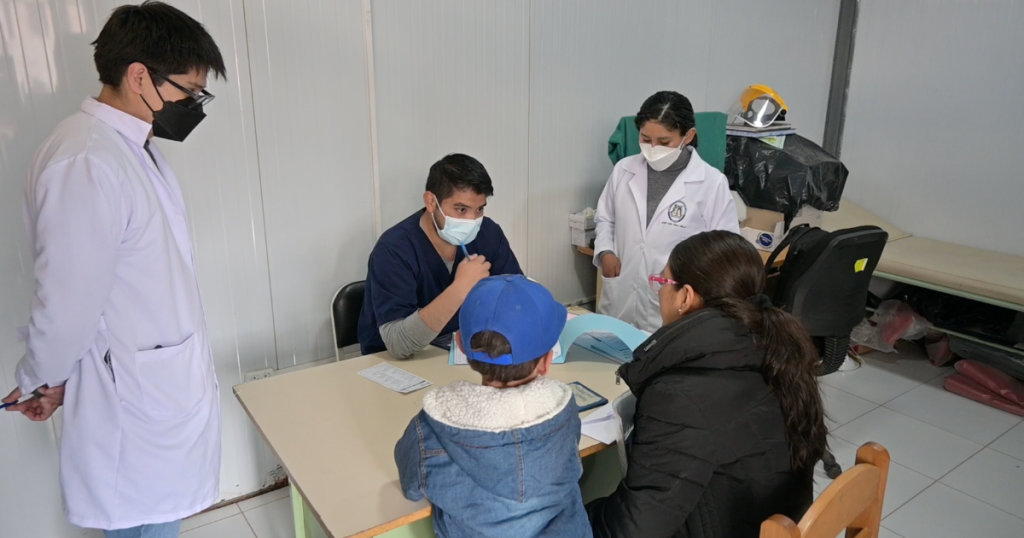
There is no single correct place for volunteering or internship experience. The best location depends on how relevant the experience is to the role or course you are applying for. If your internship was closely related to your career goals, you may place it in your Professional Experience, Work Experience or Relevant Experience section. However, If you completed a volunteer placement that was not directly related to your career, you could use a separate Volunteer Experience or International Experience section.
If you are a student or recent graduate with limited professional experience, volunteering may deserve a prominent position on your CV. It can demonstrate practical skills and responsibility, even if the role was unpaid.
For example:
Education Volunteer | Proyecto Peru Centre, Cusco, Peru
June 2026 to August 2026
- Supported English lessons for groups of up to 25 students in a local school
- Created educational activities adapted to different ages and learning levels
- Worked collaboratively with local teachers and international volunteers
- Developed cross-cultural communication, organisation and problem-solving skills
- Used Spanish in everyday professional and community settings
For an internship:
Marketing Intern | Proyecto Peru Centre, Cusco, Peru
June 2026 to August 2026
- Assisted with content creation and digital marketing projects for an international language education and volunteering organisation
- Conducted research into audience interests and online content opportunities
- Contributed ideas for social media and website content
- Worked independently while collaborating with an international team
- Developed practical experience in digital communication, research and project planning
Notice that these examples focus on actions and responsibilities. They do not simply describe the placement as an opportunity to travel.
Step 3: Use strong action verbs
Start CV bullet points with clear action verbs that show what you contributed.
Useful examples include:
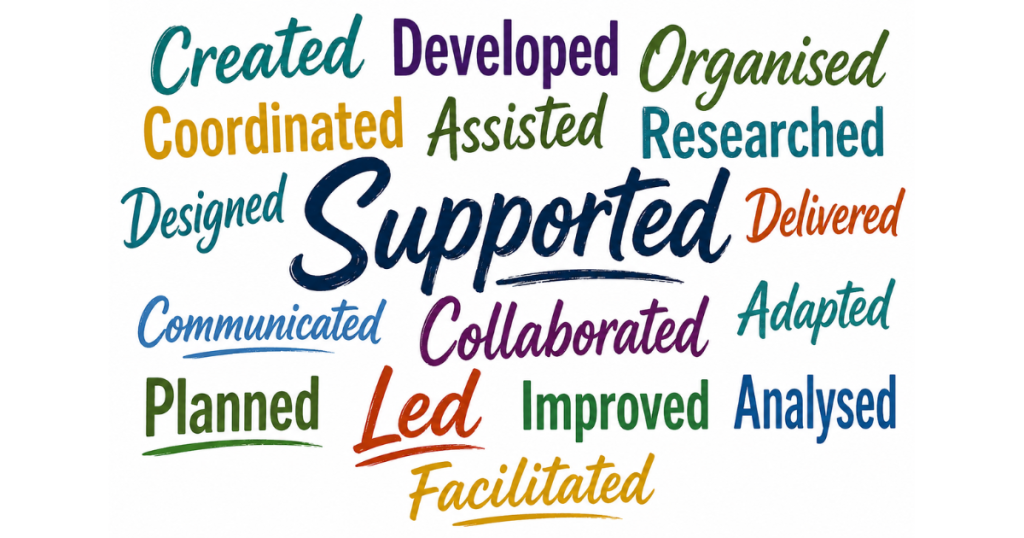
For example:
Weak:
Helped at an animal shelter.
Stronger:
Supported the daily care of rescued animals, assisted with feeding and cleaning routines and worked with local staff to maintain safe and organised facilities.
Weak:
Worked with children.
Stronger:
Planned and delivered creative activities for children while adapting communication and support to different ages and individual needs.
The strongest bullet points combine an action, a responsibility and a relevant skill or outcome.
Step 4: Add numbers when they are accurate and meaningful
Numbers can make your experience more specific and easier to understand.
You might include:
- The number of students you supported
- The number of workshops or activities you delivered
- The length of your placement
- The size of the team you worked with
- The number of projects you completed
- The amount of content you created
- The number of hours you contributed
For example:
Supported weekly English activities for approximately 40 students aged 8 to 12.
Or:
Created 12 social media posts and contributed to a three-month content plan.
Do not add numbers simply to make the experience sound more impressive. Use figures only when they are accurate and provide useful context.
Step 5: Tailor your CV to each opportunity
A common mistake is using exactly the same CV for every application.
Your volunteering or internship experience may contain many useful skills, but you should highlight the ones most relevant to the opportunity.
If you are applying for a teaching role, emphasise:
- Lesson planning
- Communication
- Classroom support
- Creativity
- Working with children
- Adapting to different learning needs
for a healthcare course, emphasise:
- Professional observation
- Communication
- Ethical awareness
- Understanding healthcare systems
- Working in multicultural environments
- Motivation for further study
If you are applying for a marketing position, emphasise:
- Content creation
- Research
- Digital communication
- Social media
- Analytics
- Project management
If you are applying for a role in business, emphasise:
- Teamwork
- Organisation
- Initiative
- Problem-solving
- Communication
- Working independently
Your experience does not change, but the way you present it should reflect the skills the employer or university values.
How to use your experience in a cover letter
A cover letter gives you more space to explain why your experience matters. Rather than repeating your CV, connect your placement to the role or course you are applying for.
Cover letter template
During my volunteer placement in Cusco, Peru, I supported educational activities in a local school and worked closely with teachers, students and volunteers from different cultural backgrounds. The experience strengthened my communication, adaptability and ability to respond positively to unfamiliar challenges. It also confirmed my interest in pursuing a career in education. I believe these skills, together with my academic experience, would allow me to contribute effectively to your organisation.
You can adapt this structure:
During my [volunteer placement or internship] in [location], I [describe your main responsibility]. Through this experience, I developed [two or three relevant skills]. The experience also helped me understand [a relevant issue, profession or career area]. I believe these skills and insights would allow me to contribute to [organisation, course or opportunity].
Be specific and avoid vague statements such as:
My experience in Peru changed my life and made me a better person.
Personal growth may be an important part of your experience, but applications are stronger when you explain how that growth happened.
For example:
Living with a host family and communicating in Spanish every day challenged me to become more independent and adaptable. Learning to manage unfamiliar situations while building relationships across cultural and language differences strengthened my confidence and communication skills.
How to talk about volunteering in a job interview
Job interviews often include questions such as:
“Tell me about a challenge you have overcome.”
“Describe a time you worked as part of a team.”
“Give an example of when you showed initiative.”
“Tell us about a time you had to adapt to change.”
“Describe a situation where you solved a problem.”
Your volunteering or internship experience may provide strong examples for these questions.
One useful structure is the STAR method:
Situation: Explain the context.
Task: Describe your responsibility.
Action: Explain what you did.
Result: Share the outcome and what you learned.
Interview example
Question: Tell us about a time you had to adapt to an unfamiliar situation.
Answer:
During my volunteer placement in Cusco, I supported activities in a local school where some of the teaching methods and available resources were different from those I had previously experienced. My responsibility was to support the teacher and help students participate in English activities. I quickly realized that some of the activities I had prepared were not suitable for every age group, so I adapted them by using more visual materials, shorter instructions and interactive games. The students became more engaged, and I learned the importance of observing a situation before assuming that one approach will work for everyone. This experience strengthened my adaptability and problem-solving skills, which I believe would be valuable in this role.
This answer is stronger than simply saying:
Volunteering in Peru made me more adaptable.
The story provides evidence.
How to use volunteering in university and postgraduate applications
Volunteering can also strengthen academic applications, particularly when it demonstrates a clear connection to your chosen subject.
For example:
A student applying for education could discuss experience supporting teachers and learning about different educational environments.
One applying for medicine or public health could reflect on observing healthcare systems, communicating across cultural differences and developing a deeper understanding of health inequalities.
A student applying for social work could discuss community support, social challenges and the importance of listening to local perspectives.
Or a student applying for international development could reflect on community-led projects, cultural awareness and the complexity of creating sustainable change.
A strong academic application should not simply say:
I volunteered in Peru because I wanted to help people.
A more thoughtful approach could be:
My experience supporting an education project in Cusco introduced me to the practical challenges of providing inclusive learning opportunities in communities with different levels of access to resources. Working alongside local teachers encouraged me to think more critically about the relationship between education, inequality and community development. The experience strengthened my interest in studying international education and helped me understand the importance of listening to local knowledge rather than assuming that solutions can be transferred directly from another context.
This shows reflection, intellectual curiosity and a connection between experience and future study.
Avoid the “voluntourism” trap
International volunteering should be presented respectfully and honestly. Avoid language that suggests you “saved,” “rescued” or “transformed” a community during a short placement. Even when volunteers make valuable contributions, local staff, organisations and community members usually provide the long-term knowledge and leadership behind a project.
Instead, focus on collaboration and learning.
For example:
Less effective:
I travelled to Peru to help poor children and improve their lives.
More respectful:
I supported local teachers and participated in educational activities while learning about the challenges and opportunities within the community.
This approach recognises the experience as a partnership rather than presenting the volunteer as the central hero.
internship
Do not wait until you are applying for a job to remember what you did. During your placement, keep a simple record of:
- Your responsibilities
- Projects you completed
- New skills you developed
- Challenges you overcame
- Positive feedback you received
- Useful statistics or outcomes
- Examples you could use in an interview
- New knowledge about your chosen career or subject
You could keep these notes in a document on your phone. At the end of your placement, consider asking your supervisor for:
- A reference
- A certificate of participation
- Feedback on your contribution
- Permission to include completed projects in a portfolio
- A description of your responsibilities
These materials may be useful when applying for jobs, internships, scholarships or academic programmes.
Your experience is valuable, but you need to explain why
Volunteering or completing an internship can give you valuable stories, skills and experiences. However, the experience will have the greatest impact when you reflect on it carefully and communicate it clearly.
Remember:
Describe what you did.
Explain what skills you developed.
Use specific examples.
Connect your experience to the opportunity.
Show what you learned.
Be honest about your responsibilities.
Recognize the role of local staff and communities.
A meaningful placement can help you build practical experience, explore a future career, develop confidence and gain a broader understanding of the world. Whether you are applying for your first job, preparing for university, applying for postgraduate study or planning a career change, the skills you gain may continue to support you long after you return home.
At Proyecto Peru, our volunteer programs and internships provide opportunities to contribute to local projects while gaining practical experience, developing professional and personal skills and becoming part of life in Cusco. Whether your interests include education, healthcare, social work, animal care, environmental projects, business or marketing, we can help you find an experience that connects with your goals.
Your time in Peru can be an important part of your future. The key is knowing how to tell the story.
If you are looking for the right internship of volunteering experience, get in touch with use at info@proyectoperucentre.org for more information and advise.