A Week in the Life of a Proyecto Peru Volunteer
When people see themselves volunteering in Cusco, they often imagine something out of a travel brochure: pictures of smiling backpackers, snapshots of one of the wonders of the world (Machu Picchu), mountain backdrops, llamas on cobblestone streets, and the occasional shot of someone holding a baby alpaca. Those moments are real and lived in everyday life here in Cusco, but they are far from the full story.
The real story of volunteering in Peru is found in the routine of an ordinary week, with firsthand routines straight from real volunteers: the early mornings, the bus rides across Cusco, the Spanish words you stumble over at breakfast with your host family, the friendships built between volunteers from different continents, and the quiet sense of belonging that grows in a city you didn’t know very well two weeks ago, making you feel like a true local.
This blog is a true behind-the-scenes look at what a typical week looks like for a Proyecto Peru volunteer in Cusco. We followed several volunteers across our different programs: medical, animal care, teaching, sustainable farming, and more, to paint an honest picture on daily life based on real experience. Whether you are considering a gap year, a career break, or simply searching for a meaningful trip abroad, here’s what your week could actually look like.
Why a “Day in the Life” Matters Before You Commit
Before booking a flight halfway across the world, most people want to know what they are actually getting themselves into. Picture-perfect program descriptions will only tell you so much, and there is so much more information that needs to be communicated: What does your morning look like? Where do you eat lunch? Who do you spend your weekends with? Is it exhausting, exciting, lonely, fulfilling, or all four at once?
Understanding the daily rhythm of volunteering in Peru is one of the best ways to decide if this kind of trip is right for you. It also helps you arrive better prepared: emotionally, practically, and culturally.
Monday: Arriving Into the Rhythm of Cusco
For most volunteers, the week doesn’t begin at a project, it begins the day before, when you arrive in Cusco for the very first time.
Stepping out of the airport, the first thing that hits you is the very noticeable lack of oxygen. Cusco sits at over 11,000 feet, and the altitude is something you feel immediately, even just lifting your suitcase into the taxi. The second thing that hits you is the view: the snow-capped Andes in the distance, terracotta rooftops climbing up the surrounding hills, and the vibrant energy of a city that has been alive for over a thousand years.
Meeting Your Host Family
If you’ve chosen to combine your volunteer placement with a homestay experience in Cusco, and most of our volunteers do, your first real introduction to the city happens at your host family’s front door. There’s usually a warm welcome, often a cup of mate de coca to help with the altitude, and a tour of your new home: your room, the kitchen, the shared spaces, and the all-important Wi-Fi password.
For many volunteers, this first evening is quieter than expected. You’re tired from travel, adjusting to the altitude, and trying to absorb a flood of new Spanish words. The host families understand this completely, as they’ve welcomed dozens of volunteers before you and know to keep the first night gentle and easy: a simple dinner, a few introductory questions, and an early night. You may even sleep through the whole day and skip your first meals altogether.
This is often the moment volunteers realize that the homestay experience in Peru is going to be more meaningful and comfortable than they expected. You’re not checking into a hotel. You’re being welcomed into someone’s home and becoming part of their family.
First Impressions of Cusco
If you arrive with any daylight left, the temptation to explore is almost impossible to resist. A short walk from most of our homestays takes you toward the Plaza de Armas, the historic heart of the city which you will be passing through almost daily. Cobblestone streets, hand-carved wooden balconies, churches built on top of Inca stonework, locals walking with alpacas and llamas everywhere, and the smell of fresh bread and ceviche: it’s a lot to take in all at once.
[Natalie, Psychology (Medical) Intern/Volunteer, USA] — “I expected the highlights of my trip to be Machu Picchu or Rainbow Mountain. But actually, the things I think about most are the small ones: the next meal, walking home from my project at sunset, or sharing a coffee with another volunteer between classes. In San Diego, activities are usually only busy on weekends, but in Cusco, it’s every night! Those are the moments I’ll remember.”
Honest Note
Take it easy on your first day. Walking (especially uphill) at over 11,000 feet can leave even fit/conditioned travellers breathless within a block. Drink lots of water, skip alcohol the first night, and let your body adjust before you try to see everything.
Monday Morning: Orientation and Meeting the Team
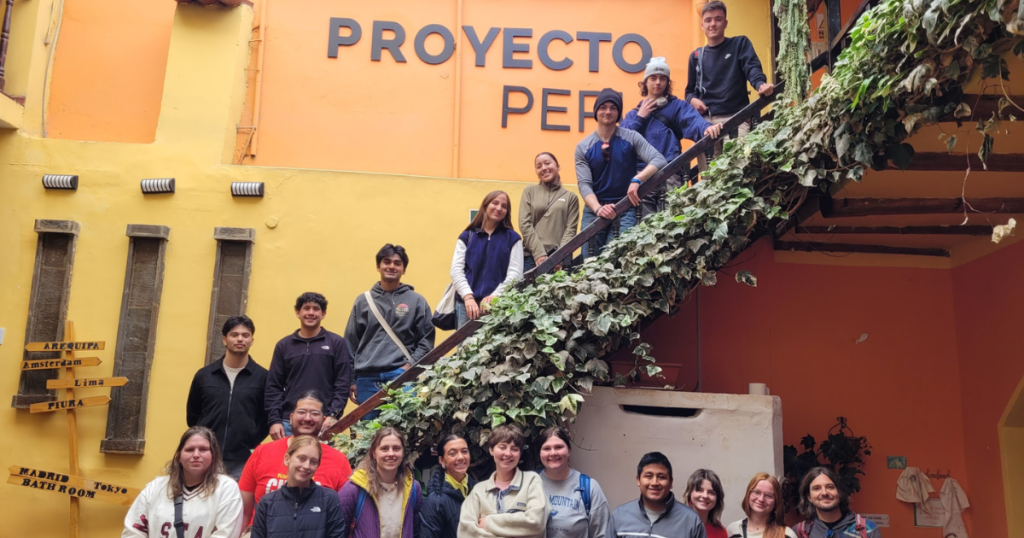
Most Proyecto Peru volunteers begin their week with an orientation on Monday afternoon. If you’re new to Cusco, this is when you’ll meet our team, settle in, and receive your introduction to your project.
We walk you through the basics of life in Cusco: how to use the local buses, where to exchange money safely, which neighborhoods to explore, where to send letters from the post office, must-try meals, and how to stay healthy at altitude. For volunteers staying with a host family, this is also when we confirm any last-minute homestay details and answer any questions that came up during your first night.
This is also when you’ll meet other volunteers arriving the same week as you. Some of the friendships made during this orientation last not only throughout the program, but well beyond it too.
Monday Afternoon: First Day at Your Project
After orientation, most volunteers have the rest of Monday to themselves. This is when the city starts to feel a little less overwhelming. Some volunteers use the afternoon to walk around their neighbourhood, find the nearest market or pharmacy, exchange money, or pick up a local SIM card. Others head back to their host family for a quiet afternoon and an early dinner.
Project placements typically begin on Tuesday, either in the morning or the afternoon depending on your program’s schedule. That gives you Monday to rest, adjust to the altitude, and arrive at your first day feeling ready rather than rushed.
Honest Note
The first day is rarely the most productive. It’s a day of listening, observing, and adjusting. Expect to feel a little overwhelmed, and that’s normal. It passes quickly once you become comfortable with the work, people, and environment, and it usually doesn’t take long to adjust.
Tuesday: Falling Into the Routine
Tuesday is when your schedule really gets going. For most volunteers, it’s the first official day at your placement, and the week starts to take shape. You wake up in your homestay, eat breakfast with your host family, and head off to your project for the day.
Breakfast With Your Host Family
The homestay experience in Cusco is one of the most valuable parts of volunteering with Proyecto Peru. Mornings often start with tortilla de avena, fruit with granola, and siete harinas: a warm, nutty Andean drink made from seven toasted grains that locals swear keeps you energized through the high-altitude mornings. Conversations at breakfast are usually in Spanish, even if you’re a beginner. This is where your language immersion starts to grow without you noticing.
[Hannah, Education Volunteer, Canada] — “I came in expecting a homestay to be transactional: a room, a bed, breakfast. But by my second week, my host sister was teaching me how to make lomo saltado and my host mom was packing me snacks for my project days. I’m pretty sure I’m going to cry at the airport once I leave.”
Project Work in Full Swing
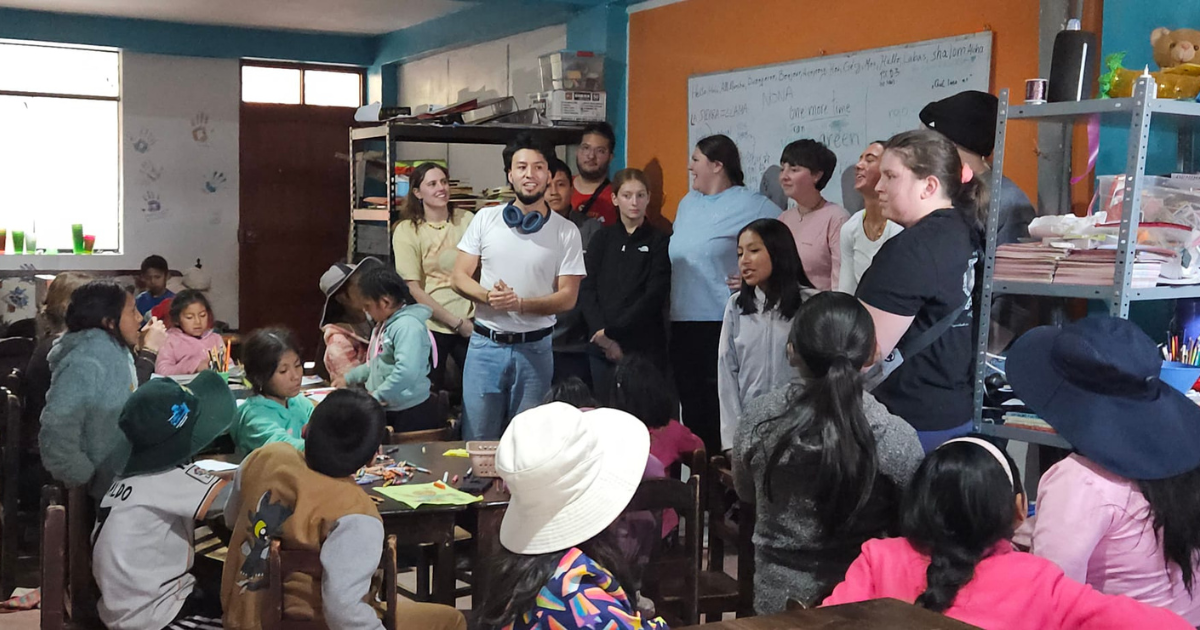
If you’re with our Medical Volunteering in Cusco program, that might mean shadowing a doctor or nurse at a local clinic. If you’re with our Animal Care Volunteering project, you may spend the first afternoon learning the feeding routine. Education Volunteering usually starts by observing a class and being introduced to the children.
By mid-morning or early afternoon, you’re at your placement. The work depends entirely on your program:
- Medical Volunteering may rotate through different departments, support patient care, observe procedures, or help with administrative tasks at health centres around Cusco.
- Education Volunteering helps with homework, run games, prepare snacks, and support children whose families work long hours. Also supports local classrooms, often helping with English pronunciation and conversation practice.
- Animal Care Volunteering at our partner rescue centres help feed and care for animals, clean enclosures, and learn about conservation work in the Sacred Valley.
- Environmental Volunteering takes place at our organic farming project in the Sacred Valley, where volunteers plant, harvest, and learn permaculture techniques. (See the Urubamba spotlight below, and this project is based outside Cusco.)
A Different Kind of Week: Environmental Volunteering in Urubamba
Most Proyecto Peru volunteers are based in Cusco itself, but our Environmental Volunteering program is a little different. The project is located in Urubamba, a town in the heart of the Sacred Valley, about an hour and a half by bus from Cusco. Volunteers on this program live with a host family in Urubamba rather than in Cusco, which means your week looks slightly different from the one we’ve been describing.
What to Expect in Urubamba
Urubamba is not as active as Cusco, sitting at a lower altitude (which most volunteers find easier on the body) and surrounded by some of the most beautiful mountain scenery in Peru. The town itself has a slower, more rural rhythm with fewer tourists, more open sky, and a closer connection to the agricultural traditions that have shaped the Sacred Valley for centuries.
Volunteers work at a vivero (plant nursery) from 8:30 am until 1:30 pm, Monday to Friday, helping local workers grow food and ornamental plants, gaining hands-on experience with plant propagation, grafting techniques, and traditional Andean farming methods. Afternoons are free and usually calm, perfect for exploring Ollantaytambo, Pisac, or simply spending time with your host family.
Honest Note
If you choose Environmental Volunteering, you’ll get a quieter, more rural homestay experience in Peru than volunteers based in Cusco. That’s a feature, not a drawback, that many of our environmental volunteers say the slower pace and the scenery of the Sacred Valley ended up being the most memorable part of their trip. But it’s worth knowing in advance: your “week in the life” will look a little different from the Cusco-based version described in this post.
The variety of Proyecto Peru’s options is one of the things that makes volunteering in Peru so unique. You’re not put into a one-size-fits-all role; you’re matched with a project that fits your interests, experience, and goals.
Wednesday: Spanish Class and the Heart of the Week
By midweek, the city starts to feel familiar. You know which buses to catch and recognize your walking route, to and from your project. You know your favourite panadería for an afternoon snack. This makes you more curious about the city, not wanting to miss any good local food spots.
Why So Many Volunteers Add Spanish Classes
A large number of our volunteers choose to volunteer and learn Spanish in Cusco at the same time. Spanish classes can be added to any program. They can be group or private sessions, mornings or afternoons, and many volunteers say it ends up being one of the most valuable parts of their entire trip.
How Spanish Classes Fit Into the Week
Classes are held at our school in central Cusco, just a few minutes’ walk from the Plaza de Armas, making it very convenient for everyday commuting. Most volunteers do two to three hours of Spanish a day, either before or after their project. By Wednesday, you’ve usually had two or three classes, and you start to notice the difference at the dinner table with your host family: picking up more words and communicating more confidently.
[Markus, Spanish Course Cusco, UK] — “On my second day, I walked into a café near the Plaza and ordered my whole meal in Spanish: no English, no pointing. That’s when it clicked. I’d been here 48 hours and was already learning faster than years of classes back home.”
Afternoon: Exploring the City
Wednesdays are often the day volunteers start to branch out socially. After project work, you might grab dinner with other Proyecto Peru volunteers, attend a free salsa class, join everyone for a sports day, explore San Blas, or hike up to Cristo Blanco, a viewpoint above the city, to watch the sunset. Cusco is a small city, and you’ll start running into familiar faces everywhere: at cafés, in the market, and at local events.
Thursday: The Day You Realize You’re Settling In
There’s a moment, usually around Thursday of the first or second week, when something clicks and you stop checking Google Maps. You greet your local merchant by name. You catch yourself thinking in Spanish or understanding words without translating them, even if only for a second.
Project Work That Starts to Feel Like Yours
By now, the work itself begins to feel less like an assignment and more like a real contribution to the team. Medical volunteers start to recognize patients. Teaching volunteers know which kids need extra patience and which ones love a challenge. Animal care volunteers know which dog hides at the back of the kennel and needs a little extra encouragement.
This is when many volunteers say their relationship to the project shifts from “I’m here to help” to “I’m part of something.”
[Ben, Animal Care Volunteer, Australia] — “There’s a dog at the rescue who wouldn’t come near anyone for the first four days I was there. I just sat near his enclosure every morning and didn’t push it. On day five, he came over and put his head on my knee. The staff told me he hadn’t done that with anyone in months. It made me feel like I was making a meaningful difference.”
Evening: Dinner With the Host Family
Evenings during the week are usually calm in the household. Most volunteers eat dinner at their homestay, where conversations cover everything from Peruvian politics to Cusco’s history to your host mom’s wild story about her experience with a duende. For many volunteers, this is where the homestay experience in Peru becomes something they truly treasure, not just a place to sleep, but a window into local life that no hotel or hostel could ever offer.
Friday: Wrapping Up the Work Week
Fridays at a project can feel bittersweet, especially as you start to anticipate the weekend ahead.
A Lighter Day at Most Projects
Many of our partner organizations slow down slightly on Fridays: schools may finish earlier, clinics may be quieter, and farms often switch to maintenance tasks rather than new planting. It’s a good day for reflection: what worked this week, what you’d do differently, what you want to focus on next week.
A Note on Sustainable Impact
One of the values we care about deeply at Proyecto Peru is sustainable volunteering in Cusco, making sure volunteer work supports the long-term goals of local communities rather than just feeling good in the short term. That means our partner projects are led by local staff, and volunteer roles are designed to be genuinely useful rather than going through the motions.
[Kevin, Environmental Volunteer, Germany] — “Back home I measure my day by what I finish. At the vivero in Urubamba, I started measuring it in what I learned from people who have been doing this for generations. That shift in how I think about work might be the most useful thing I take home from this trip.”
Friday Night: The Volunteer Community Comes Out
If there is one universal truth about volunteering in Cusco, it’s that you don’t stay lonely for long. Friday nights are when the volunteer community really comes together. Group dinners, salsa nights, local events, board game cafés, and live music venues all become part of your social calendar. You attend these events with the friends you have made along the way.
You’ll meet other travellers from every corner of the world: undergraduate students from Germany, nurses from Australia, gap-year volunteers from the UK, and career changers from the US. By the end of your time in Cusco, your contacts list looks like a small United Nations.
Saturday: Weekends Are For Exploring Peru
Saturdays belong to you and the beautiful city of Cusco. With no project work scheduled, this is when volunteers take advantage of being based in one of the most extraordinary travel destinations in South America.
Day Trips and Weekend Adventures
Popular Saturday options include:
- The Sacred Valley – Pisac market, Ollantaytambo ruins, and stunning Andean scenery
- Lake Titicaca – a longer trip across the world’s highest navigable lake, with visits to the Uros floating reed islands, an overnight homestay on Amantani Island, and the rural lakeside community of Llachón
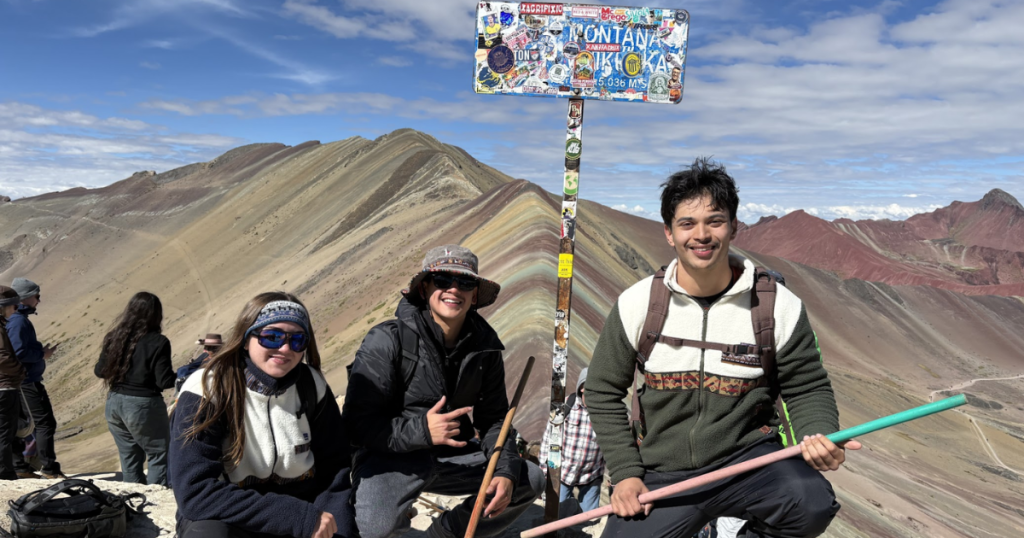
- Rainbow Mountain (Vinicunca) — a challenging but unforgettable high-altitude hike
- Humantay Lake – a turquoise glacial lake set against snow-capped peaks
- Machu Picchu – yes, you can fit it into a long weekend, and most volunteers do at least once during their stay
- City Tour of Cusco – a half-day guided tour covering the Cathedral, Qoricancha, and the famous Inca ruins just above the city: Sacsayhuamán, Qenqo, Tambomachay, and Puca Pucara, a great first weekend activity to get a grasp of the city.
- Cristo Blanco Cusco – Take a 45-minute hike along the mountainside with some of the friends you met at orientation (or go solo) to see an iconic landmark. It offers one of the most stunning views of the entire city of Cusco.
There is so much to see in just this part of Peru and these are only some of the main attractions that are a must see.
Saturday Evenings in Cusco
After a day of hiking or sightseeing, Saturday nights can be fast-paced or calm, depending on your mood that day. Typical evenings include group dinners, an outing to Chango Club, a pisco sour or two in San Blas, or quiet conversations on a rooftop watching the lights of Cusco below.
[Léa, Medical Volunteer, France] — “Three weekends in a row I texted my family the same thing: ‘you’re not going to believe where I am right now.’ Machu Picchu, then Rainbow Mountain, then Humantay Lake. Cusco isn’t just a city you volunteer in. It’s the launchpad for some of the best weekends of your life.”
Sunday: Rest, Reflection, and Slow Mornings
Sundays in Cusco are slow, and that’s part of their charm. For locals, Sundays are spent with family and friends, grateful for another week of life.
A Slower Pace
Many volunteers spend Sunday morning at home with their host family, sometimes joining them for a traditional Peruvian Sunday lunch like cuy, lomo saltado, or chicharrón, with mazamorra morada waiting at the end of the meal. The homestay experience in Cusco often peaks on Sundays: there’s no rush, the food is unhurried, and the conversations stretch on longer than any other day of the week.
Preparing for the Week Ahead
By Sunday afternoon, most volunteers take their laundry to a lavandería, catch up with family and friends back home, journal a little, and start mentally preparing for the week to come. Some explore the city’s quieter neighbourhoods, others meet up with friends for a final coffee before another week starts.
The city on Sundays has its own kind of slow, settled rhythm that makes Cusco feel like home faster than you’d expect.
What This Kind of Week Teaches You
A week of volunteering in Peru looks like a routine on paper: work, meals, classes, weekends, but the cumulative effect is anything but ordinary. Most volunteers leave Cusco with more than just photos. They leave with:
- Improved Spanish, often dramatically so
- A new appreciation for a culture and country very different from their own
- Friendships that often last for years
- A clearer sense of what kind of work and life they want
- Real, tangible experience that strengthens their CV or résumé
- A connection to a city, a host family, and a community
The Honest Truth About Volunteering in Cusco
Not every day is magical. Some afternoons are tiring from work or walking. Other projects have frustrating logistical hiccups. Many Spanish conversations leave you exhausted. Even home sickness creeps in around week two.
But these challenges are part of what makes the experience formative and valuable. Volunteering in Cusco, if done as intended with the right organisation behind you, such as Proyecto Peru, is not a holiday; it is a real engagement with a real place, and that’s exactly what makes it worth doing.
Ready to Experience Your Own Week in Cusco?
If reading this gave you a clearer picture of what a week of volunteering in Peru actually looks like, you’re already ahead of most people who book a program. The next step is choosing the project that fits your personality, your goals, and your travel timeline.
At Proyecto Peru, we work with volunteers every week who are trying to figure out where they belong in a community. Whether you’re drawn to medical volunteering, animal care, teaching, sustainable farming, or simply want to experience a volunteer placement with Spanish classes and a homestay experience, there is almost certainly a fit for you here in Cusco.
Visit our volunteering page, our internship page, or our Spanish school page for more information. You can also reach our team directly at info@proyectoperucentre.org – We’ll help you find the program that fits the experience you want to have.
Your week in Cusco is waiting!